

5. Discentes

ALICE LIMA ROSA MENDES, Ph.D Student – PPG-Pharmacy/UFSC 
Departamento de Bioquímica, Centro de Ciências Biológicas
Universidade Federal de Santa Catarina
http://lattes.cnpq.br/0937593399537592
https://orcid.org/0000-0002-1960-9647
Ph.D student at Graduate Program of Pharmacy/Federal University of Santa Catarina (UFSC). Master in Nanoscience and Nanotecnology by University of Brasilia (UnB). Undergraduate course in Pharmacy (UniFacid, Teresina-Pi). The scientific interest for the Ph.D project is “Effect and mechanism of action of 1,25(OH)2 Vitamin D3 in insulin resistance in adipocytes (3T3-L1) and on induced-obesity in mouse” that is focused to the development of strategies to the diagnostic as well as to the coordinated development of drugs to the diabetes therapy emphasizing the clinical electrophysiology platform as a tool to reach the objectives.

BRUNA ANTUNES ZANIBONI, Ph.D Student – PPGBQA/UFSC
Departamento de Bioquímica, Centro de Ciências Biológicas
Universidade Federal de Santa Catarina
http://lattes.cnpq.br/2053365327725248
brunaantunesz@outlook.com
https://orcid.org/0009-0004-0986-155X
Graduated in Pharmacy from the Federal University of Santa Catarina (UFSC) and holds a Master’s degree in Biochemistry from the Graduate Program in Biochemistry (PPGBQA/UFSC). She is currently a Ph.D. candidate in Biochemistry (PPGBQA/UFSC) and a CAPES scholarship recipient. She was awarded a Scientific Initiation Scholarship (PIBIC/CNPq) for three years at the Institute of Cellular Bioelectricity (IBIOCEL): Science and Health, where she continues her research activities to this day. During her master’s studies, she was also supported by a scholarship from FAPESC (Santa Catarina State Foundation for Research and Innovation Support). Her research has focused on environmental toxicology related to male infertility, as well as the mechanisms of action of natural insulin-secretagogue compounds. She has experience with patch-clamp techniques (cellular electrophysiology) and in silico methodologies, including molecular docking studies.
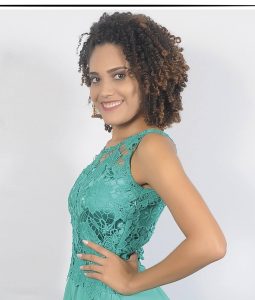
Drielle Moreira Steffen, Master’s student
Programa de Pós-Graduação em Biologia Celular e do Desenvolvimento (PPGBCD)
Universidade Federal de Santa Catarina – Campus Florianópolis
driellesteffen@gmail.com
https://orcid.org/0009-0009-1807-9910
https://lattes.cnpq.br/9032562076881553
Biologist (holding both a bachelor’s and a teaching degree) with a decade of experience in fauna rescue and monitoring at environmental consultancy firms. Presently, she is a student in the Graduate Program in Cell and Developmental Biology at the Federal University of Santa Catarina, where I am investigating the effects of pesticides on the male genital system of rodents by using several techniques to assess reproductive toxicity, including electrophysiological evaluation.
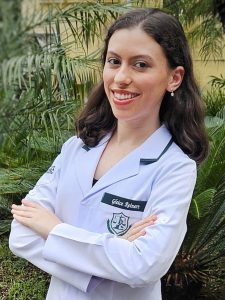
Gleice Reinert – FAPESC scholarship
http://lattes.cnpq.br/4580006624569830
https://orcid.org/0000-0003-1468-6173
gleice_reinert@hotmail.com
Graduated in Nutrition (bachelor’s degree) from Superior Institute and Lutheran Educational Center of Santa Catarina – Bom Jesus/IELUSC. Certificate Program in Intensive Care at São José Municipal Hospital in Joinville, Santa Catarina (Brazil). Master’s student in the Graduate Program in Biochemistry at Federal University of Santa Catarina (UFSC, Brazil) and FAPESC scholarship holder. Works in the Signal Transduction line of research, carrying out studies with phthalates in Sertoli TM4 cells.
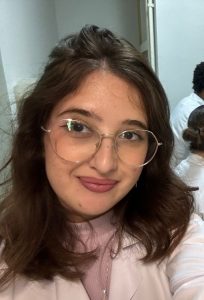
KAROLINY ARAUJO
Departamento de Biologia Celular, Embriologia e Genética
Programa de Pós-Graduação em Biologia Celular e do Desenvolvimento
Universidade Federal de Santa Catarina
E-mail: karolinyarauja@gmail.com
http://lattes.cnpq.br/6605906499516361
https://orcid.org/0009-0006-8283-5221
Teaching degree in Biological Sciences at the Federal University of Santa Catarina (UFSC). Currently, I am a master student (CAPES) in the Graduate Program in Cell and Developmental Biology (UFSC), where I study the reproductive effects of exposure to herbicides and insecticides in male zebrafish (Danio rerio) by using many techniques to assess the reproductive toxicity, including electrophysiological assessment.

Dra. Paola Miranda Sulis, Post-doc student, FAPESC scholarship
Departamento de Bioquímica, Instituto de Ciências Biológicas
Universidade Federal de Santa Catarina – Florianópolis/SC
https://orcid.org/0000-0002-2027-2471
http://lattes.cnpq.br/2226582534670190
Post-doc student in the postgraduate Program in Biochemistry, UFSC/Brazil (2024), as part of the project entitled “Diagnostic and targeting strategy plataform for the development of drugs using precision electrophysiology to targed new insulin secretagogues. PhD in Biochemistry from the postgraduate program in biochemistry – UFSC/Brazil (2021), working in the line of research with an emphasis on molecular mechanisms of insulin secretion, insulin signal transduction pathways and the new targets for the treatment of diabetes and associated comorbidities. Master in Physiological Sciences from the multicenter program in physiological sciences UFSC (2016), working in the area of endocrine physiology related to metabolic parameters involved in glycemic homeostasis. Graduated in Nursing from Centro Universitário Metodista/Brazil (2009).
Basic Health Unit, being responsible for receiving, organizing and dispensing standardized basic medicines.